

I’ve analyzed hundreds of business logistics decisions over the past few years, and one mistake keeps showing up.
Companies look at a car shipping quote and think that’s the whole cost. It’s not even close.
You’re probably weighing whether to drive vehicles yourself, send employees on the road, or hire a professional service. The sticker price makes you hesitate.
Here’s what most businesses miss: the real expense isn’t the shipping fee. It’s everything else that happens when you move vehicles without a proper system.
I broke down the actual costs of vehicle transport for this article. Not just what you pay upfront, but what it does to your time, your liability, and your assets.
The benefits of shipping a car eyexbusiness go way beyond convenience. This is about your bottom line.
We analyzed operational logistics data and fleet management patterns to understand where companies lose money. The numbers tell a clear story.
You’ll see why professional vehicle transport isn’t an expense to minimize. It’s a decision that affects your operational efficiency and risk exposure.
No fluff about customer service or peace of mind. Just the financial and strategic reasons this matters for your business.
The True Cost-Benefit Analysis: Beyond the Sticker Price
Most people look at car shipping quotes and think it’s expensive.
I used to think the same thing. Then I actually did the math on what it costs to drive a vehicle cross-country myself.
The numbers didn’t add up the way I expected.
Here’s what most businesses miss. The sticker price of shipping isn’t the real comparison. You need to stack it against what driving actually costs you.
Let’s break down the hidden expenses.
When you send an employee on a road trip with your vehicle, you’re paying their wages for every hour behind the wheel. If they make $25 an hour and the drive takes 30 hours, that’s $750 right there. Add fuel costs (figure $200 to $400 depending on the route), meals, hotel stays, and the return trip home. You’re easily looking at $1,500 before you even factor in insurance riders or potential breakdown costs.
And that’s assuming nothing goes wrong.
But there’s a bigger cost most people ignore completely.
Opportunity cost is where things get interesting.
Every hour your sales manager spends driving from Phoenix to Boston is an hour they’re not closing deals. If that person typically generates $500 in revenue per productive hour and you’ve just taken them offline for three days? You do the math.
I think we’re going to see more companies wake up to this reality over the next few years. The benefits of shipping a car eyexbusiness are becoming harder to ignore as labor costs keep climbing and talent gets harder to replace.
Here’s something else worth considering.
Your vehicle loses value with every mile.
Professional transport doesn’t add 2,000 miles to your odometer. That matters when you go to sell or trade in. Most vehicles depreciate about $0.10 to $0.15 per mile in wear and tear (according to IRS business mileage calculations). On a cross-country haul, you’re looking at $300 in depreciation alone.
Then there’s maintenance. Those extra miles mean oil changes, tire wear, and general strain on your engine. It adds up faster than you think.
My prediction? Companies that keep doing in-house transport for convenience are going to find themselves at a competitive disadvantage. The ones that treat shipping as what it really is (a cost-saving measure) will come out ahead.
Maximizing Operational Efficiency and Time Savings
You don’t have time to babysit a vehicle across state lines.
I see businesses try to handle car transport themselves all the time. They assign an employee to drive, book hotels, track mileage. Then wonder why it costs more than they budgeted and takes twice as long.
Some people argue that keeping transport in-house gives you more control. They say you know exactly where your vehicle is and who’s handling it. Fair point.
But here’s what that control actually costs you.
Your manager spends hours figuring out routes and DOT compliance paperwork. Your employee burns three days driving instead of doing their actual job. And when weather hits or traffic backs up? Your timeline goes out the window.
Professional shippers handle the entire logistics chain. They know the routes. They file the regulatory paperwork. They give you a delivery window and stick to it.
No guessing. No last-minute scrambles.
When you look at the benefits of shipping a car eyexbusiness, the time savings alone justify the cost. But it goes deeper than that.
Here’s my recommendation.
Calculate what those three days of employee time actually cost. Not just salary. Factor in the work that doesn’t get done. The projects that get delayed. The client calls that go to voicemail.
Then compare that to what a logistics expert charges.
Most businesses find the math works in favor of professional shipping. Especially when you account for the variability problem (traffic jams in Atlanta can add six hours you didn’t plan for).
Focus your team on what they do best. Let the shipping companies handle what they do best.
That’s not outsourcing for the sake of it. That’s smart resource allocation.
Mitigating Risk and Ensuring Asset Protection
You’re moving vehicles for your business.
And every time one hits the road, you’re taking on risk.
What happens if there’s an accident? What if the vehicle gets damaged? Who pays when something goes wrong?
These questions keep business owners up at night. I’ve talked to people who’ve lost thousands because they didn’t think through the protection side of vehicle transport.
Some folks say you can just add vehicles to your existing business insurance and call it a day. They figure it’s cheaper to handle transport in-house with current staff.
But here’s what that approach misses.
Your standard policy probably doesn’t cover commercial vehicle transport the way you think it does. And when damage happens (not if, when), you’re stuck fighting with your insurance company while your client is demanding answers.
Professional transport services flip this entire problem.
They carry cargo insurance policies built specifically for moving vehicles. We’re talking coverage that actually protects the asset from pickup to delivery. When you use a professional service, the financial liability transfers from your business to the carrier.
That’s not just convenient. That’s how to get more clients in your business eyexbusiness by protecting your reputation.
Here’s another thing most people overlook.
Licensed professional drivers have way lower accident rates than regular employees who occasionally move vehicles. These drivers do this every day. They know how to handle different vehicle types and road conditions.
Lower accident risk means you’re protecting your company from lawsuits and insurance rate spikes.
Now let’s talk about the Bill of Lading.
The BOL is your safety net. It’s a legally binding inspection report that documents the vehicle’s exact condition before transport starts and after it ends.
Think of it as your proof. Scratches, dents, mileage, everything gets recorded. If a dispute comes up about damage, you’ve got documentation that holds up in court.
Without a BOL? You’re stuck in he-said-she-said territory.
The benefits of shipping a car eyexbusiness go beyond just moving metal from point A to point B. You’re buying protection, transferring risk, and keeping your business safe from the kind of problems that can tank your reputation overnight.
Scalability and Fleet Management Simplified
I learned this the hard way.
Back when I was consulting for a mid-sized dealership, they tried moving 12 vehicles across state lines using individual drivers. The coordination alone ate up three days. Two drivers called out last minute. One vehicle got delayed by weather.
It was a mess.
Here’s what I should have known from the start.
Why Professional Carriers Win for Multi-Vehicle Operations
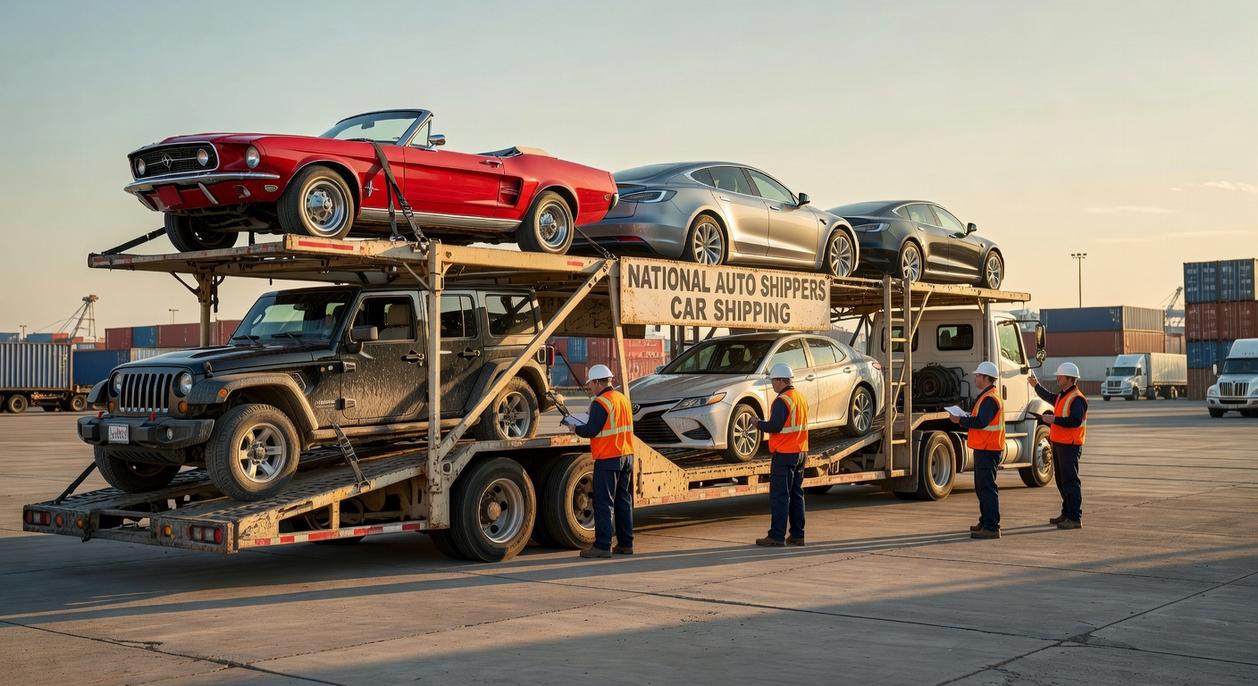
The math is simple. One carrier truck moves 8 to 10 vehicles in a single trip. That’s the same fuel cost, one driver, one route. Compare that to hiring 10 separate drivers with 10 different schedules and 10 different potential problems.
You can’t scale a business on hope and individual drivers.
When you’re managing a fleet, you need systems that work without constant babysitting. Professional auto transport gives you that. You make one call, coordinate one pickup, track one shipment.
Here’s what changes when you work with the right shipping partner:
- You move multiple vehicles on one truck without juggling driver schedules
- You expand into new markets without building an entire logistics team
- You deploy vehicle assets on demand instead of planning weeks ahead
Some people think building an internal transport department shows commitment to growth. I thought that too until I saw the overhead costs. Insurance, payroll, vehicle maintenance, route planning software (and yes, how to collect business data online eyexbusiness becomes critical when you’re tracking all this).
The benefits of shipping a car eyexbusiness become obvious once you scale past five or six vehicles per month.
You’re not just saving money. You’re buying back time and sanity.
Enhancing Professionalism and Customer Satisfaction
Here’s what most businesses get wrong about vehicle delivery.
They think getting the car there is enough. It’s not.
I’ve seen companies lose customers over something as simple as a dusty dashboard or an extra 500 miles on the odometer. The car arrived, sure. But it didn’t arrive right.
When you’re selling vehicles online or handling corporate relocations, that first impression is everything. You can’t undo it.
Some people argue that driving the vehicle saves money and keeps things simple. And yeah, on paper it looks cheaper. But what’s the real cost when your customer opens the door to a car that’s been through three states of highway grime?
Here’s my take.
Professional transport isn’t just about moving metal from point A to point B. It’s about what that vehicle represents when it arrives.
The benefits of shipping a car eyexbusiness actually breaks down to two things that matter:
- Your customer sees a pristine vehicle that looks showroom ready
- You avoid the complaints that come from road wear and added mileage
I’ve watched businesses transform their customer satisfaction scores just by switching how they deliver. No marketing changes. No product improvements. Just cleaner arrivals.
The vehicle shows up ready for immediate use. No explanations needed about why there’s bug splatter on the windshield or why the odometer jumped.
That’s the difference between a transaction and an experience.
A Smarter Way to Move Your Business Assets
You’ve seen how professional car shipping changes the game for businesses managing vehicle assets.
The DIY approach seems cheaper at first glance. But the hidden costs add up fast. You’re looking at fuel expenses, employee downtime, wear and tear on your vehicles, and liability risks that can hit your bottom line hard.
Outsourcing to experts solves this problem. You save money, protect your business from unnecessary risk, and free up your team to focus on what actually drives revenue.
Here’s what I want you to do: Take a hard look at how you’re currently moving vehicles. Calculate what it’s really costing you (not just the obvious expenses). Compare that to what professional transport would run you.
The benefits of shipping a car eyexbusiness are clear. Lower costs, reduced liability, and better resource allocation.
Stop bleeding money on inefficient transport methods. Your business deserves better.
 Xlythra Grey is the visionary founder behind Eyex Business, a platform created to simplify complex business concepts and transform them into practical, actionable insights for modern entrepreneurs and professionals. With a strong passion for strategic development and market behavior, Xlythra established the website to become a reliable destination for readers seeking clarity in the fast-moving world of business, finance, and innovation. Her leadership combines analytical thinking with creative direction, helping Eyex Business stand out through detailed breakdowns and forward-focused reporting.